
What we install
Home battery storage
Battery systems that store electricity for use later, fitted alongside solar or on their own.
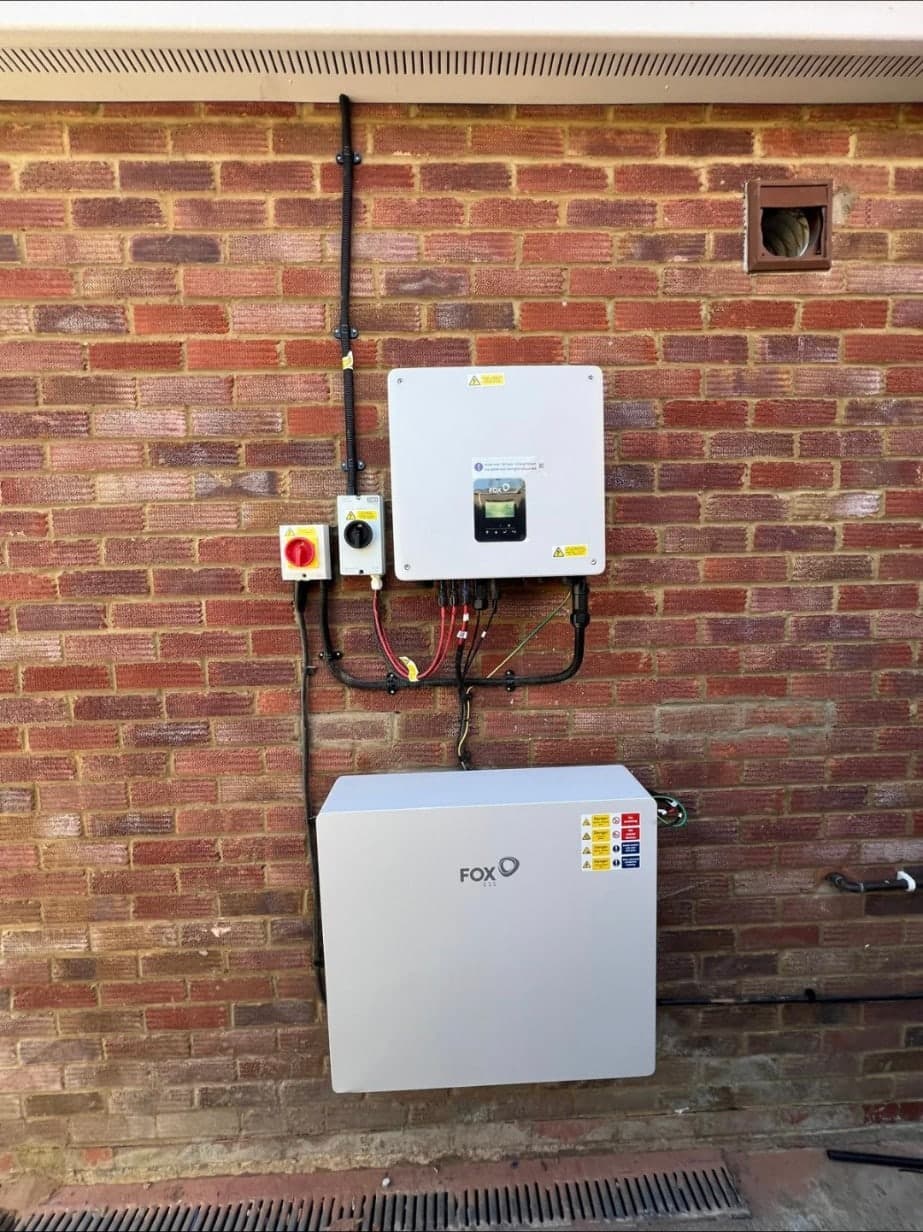
How it works
A battery system stores direct current electricity and discharges it through an inverter when the property needs power. It sits between your generation, the grid and your consumer unit, and decides in real time where electricity should come from.
With solar, the value is straightforward: solar generation peaks in the middle of the day, while household demand peaks in the morning and evening. A battery closes that gap, so more of what you generate is used in the property instead of being exported.
Without solar, a battery can still be worth fitting if you are on a time-of-use electricity tariff. It charges when electricity is cheap and discharges when it is expensive. Whether that pays depends entirely on the tariff and on how much electricity you use.
Capacity is measured in kilowatt hours. Sizing is a question of how much electricity you use in an evening, not how large a battery you can fit.
What we do on a job like this
- 01Review your electricity consumption, ideally from half-hourly data if your meter provides it, rather than sizing from a rule of thumb.
- 02Assess where the battery can be sited safely, taking account of ventilation, temperature and fire separation requirements.
- 03Specify capacity and inverter arrangement, including whether it can work with any solar system you already have.
- 04Install, test and commission the system, and configure charging behaviour around your tariff.
- 05Notify the District Network Operator as required, and hand over the electrical certificate and warranties.
Worth knowing before you commit
- Sizing follows your evening use
- An oversized battery rarely fills and rarely empties, which means paying for capacity you do not use. Consumption data gives a better answer than an estimate.
- Retrofitting to existing solar
- Adding a battery to an existing solar system is usually possible, but the approach depends on the inverter already fitted. It is checked at survey.
- Siting
- Batteries have requirements around location, ventilation and fire separation. A garage or plant space is often straightforward; inside a habitable room is more constrained.
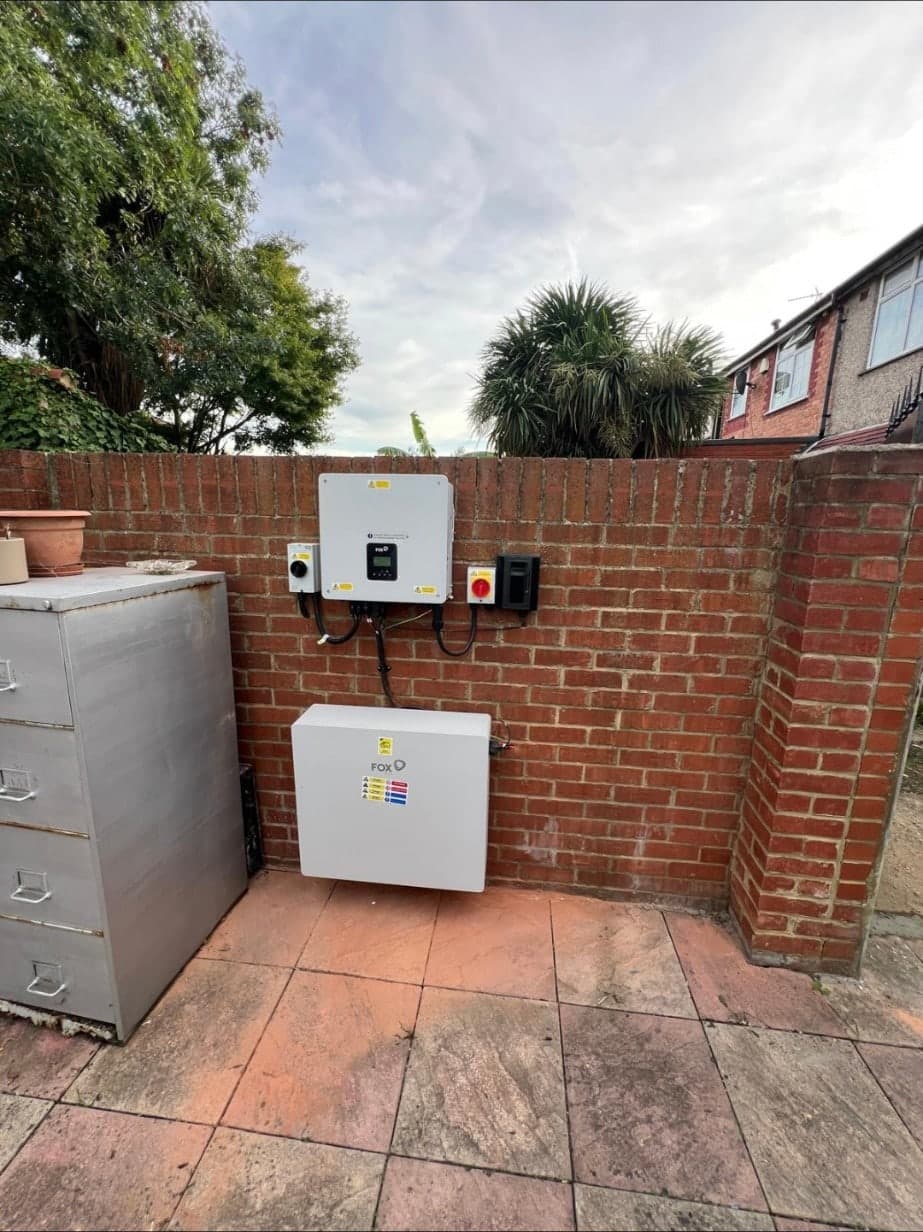
On the job
Also available
Request a property assessment
Every quotation follows a survey of the building. Tell us about the property and we will arrange one.